When you are living with Mast Cell Activation Syndrome (MCAS) or severe histamine intolerance, mealtime can feel like walking into a minefield. You eat a healthy salad with spinach, tomatoes, and an aged balsamic vinaigrette—often considered the pinnacle of clean eating—and within twenty minutes, your heart is racing, your skin is flushed, and your stomach is in knots.
Why? Because foods considered "healthy" for the general population are frequently biological triggers for a dysfunctional immune system. The single most powerful tool you have to stabilize your mast cells and lower your daily symptom burden is adopting a meticulously planned Low Histamine Diet.
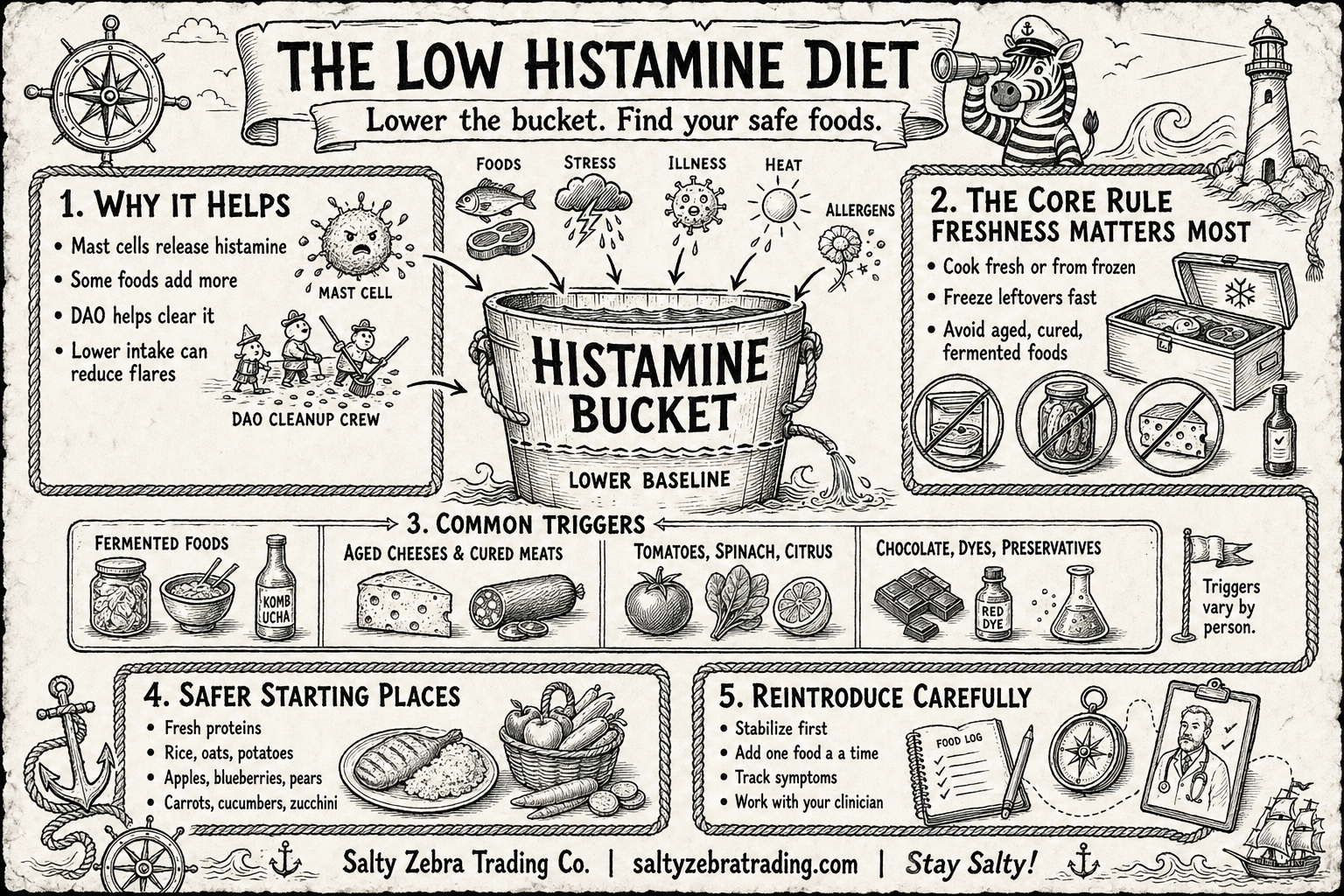
The "Why": Lowering the Baseline
Your body produces its own histamine to manage inflammatory responses, digestion, and neurotransmitter messaging. However, histamine is also found in the food you eat. It is produced by bacteria during the decay, aging, or fermentation processes.
Normally, an enzyme in your gut called DAO (Diamine Oxidase) metabolizes and clears dietary histamine before it can enter your bloodstream. But in MCAS or histamine intolerance, two things happen: your mast cells are already over-producing endogenous (internal) histamine, and your DAO enzyme may be overwhelmed or genetically deficient.
When you consume high-histamine foods, you dump fuel onto an already raging fire. By strictly limiting dietary histamine, you give your enzymatic pathways a chance to catch up and clear the backlog. You aren't curing the mast cells, but you are lowering the systemic baseline burden, making your body far less likely to tip over into a severe flare.
The Core Rules of the Low Histamine Diet
The foundational rule of eating low-histamine is actually not about the specific ingredient, but about freshness. As food sits, proteins degrade, bacteria multiply, and histamine levels skyrocket.
- Freshness is mandatory: Meat and fish must be cooked immediately after purchase or cooking from frozen. Leftovers are a massive trigger; if you do not eat a cooked meal immediately, it must be rapidly cooled and frozen, not stored in the refrigerator.
- No Fermentation: Fermented foods are deliberately high in bacteria and therefore astronomically high in histamine. This includes yogurt, kefir, sauerkraut, kimchi, kombucha, soy sauce, and alcohol (especially red wine and beer).
- No Aging or Curing: Aged cheeses (cheddar, parmesan, gouda), cured meats (salami, bacon, pepperoni, deli meats), and aged vinegars.
A Food-Safety Note: Rice, Pasta, Potatoes, and Leftovers
For people with MCAS, leftovers can be a problem for more than one reason. Histamine can rise as food sits, but some starchy foods also carry a separate food-poisoning risk. Cooked rice, pasta, potatoes, and similar foods can allow Bacillus cereus spores to grow if they are left at room temperature too long. In some cases, the bacteria can produce toxins that are not reliably destroyed by reheating.
This is sometimes called "reheated rice syndrome" or "fried rice syndrome." It can cause sudden nausea, vomiting, abdominal cramping, and diarrhea, often within hours. Most cases resolve within a day, but for someone whose mast cells are already reactive, food poisoning can also become a major flare trigger. The practical rule is simple: cool cooked foods quickly, use shallow containers, refrigerate or freeze promptly, and do not try to rescue food that sat out too long.
High-Histamine Culprits and "Liberators"
Some foods naturally contain high levels of histamine, while others act as histamine liberators—meaning they don't contain histamine themselves, but they biologically provoke your mast cells to dump their own stores.
Common Triggers to Eliminate:
- Vegetables: Tomatoes, spinach, eggplant, and avocados.
- Fruits: Citrus fruits (lemon, lime, orange, grapefruit), strawberries, bananas (especially ripe ones), and pineapple.
- Proteins: Canned fish (tuna, sardines), shellfish, and anything smoked or cured.
- Extras: Chocolate, cocoa, artificial food dyes, preservatives, and citric acid manufactured via black mold fermentation.
What CAN You Eat? (Finding Safe Harbors)
The restriction phase can feel paralyzing. It is vital to focus on the wide variety of nutrient-dense foods that generally tolerate well.
- Fresh Proteins: Flash-frozen, wild-caught fish; fresh poultry and meat (ideally frozen immediately after processing).
- Safe Veggies: Asparagus, bell peppers, broccoli, carrots, cauliflower, cucumbers, zucchini, sweet potatoes, and onions (onions contain quercetin, a natural mast cell stabilizer!).
- Safe Fruits: Apples, blueberries, peaches, pears, melon, and pomegranate.
- Grains & Starches: Rice, quinoa, oats, and potatoes.
- Dairy Alternatives: Macadamia milk, oat milk, or coconut milk (checking labels closely for triggering gums and stabilizers).
The Reintroduction Phase
A low-histamine diet is meant to be a diagnostic and stabilizing tool, not a rigid lifelong prison sentence. Most immunologists recommend a strict elimination phase for 4 to 6 weeks. Once your baseline symptoms have dramatically improved and your "bucket" is empty, you can begin the slow, methodical process of reintroducing trigger foods one at a time to identify your individual specific thresholds.
Eat fresh. Freeze fast. Listen to your body.
Stay Salty!
Authoritative Sources & Further Reading
- SIGHI (Swiss Interest Group Histamine Intolerance): The globally recognized standard for food compatibility lists
- Dr. Becky Campbell: Author of "The 4-Phase Histamine Reset Plan"
- CDC: Bacillus cereus food poisoning associated with fried rice
- FDA Bad Bug Book: Bacillus cereus symptoms, heat-stable toxin, and refrigeration guidance
- USDA FSIS: Leftovers and food safety